
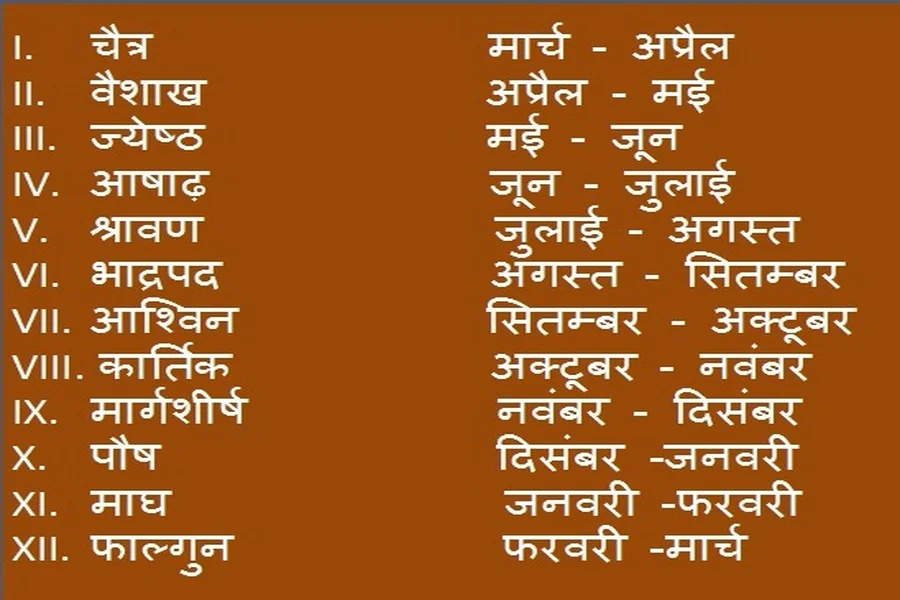
The hindi months name and seasons are an important part of Indian culture history and tradition. While most people use the English calendar for work education and daily activities the Hindu calendar continues to guide religious festivals family celebrations and agricultural practices. Every Hindi month is connected with a specific season and each season reflects changes in weather farming and cultural life.
The Hindu calendar has been followed for thousands of years. Unlike the Gregorian calendar which is based on the movement of the Sun the Hindu calendar is mainly based on the lunar cycle. Because of this the beginning of each month changes slightly every year when compared with the English calendar.
Understanding Hindi months and seasons helps students learn about Indian traditions. It also makes it easier to understand why festivals such as Holi Diwali Navratri and Raksha Bandhan do not fall on the same English date every year.
In this guide you will learn the complete list of Hindi months the six traditional Indian seasons the major festivals connected with every month and why this calendar continues to be important in modern life.
Complete List of hindi months name and seasons
The Hindu calendar contains twelve months and six seasons. Every season includes two consecutive months.
| Hindi Month | Hindi Script | English Months | Season |
|---|---|---|---|
| Chaitra | चैत्र | March to April | Vasant Ritu |
| Vaishakha | वैशाख | April to May | Vasant Ritu |
| Jyeshtha | ज्येष्ठ | May to June | Grishma Ritu |
| Ashadha | आषाढ़ | June to July | Grishma Ritu |
| Shravana | श्रावण | July to August | Varsha Ritu |
| Bhadrapada | भाद्रपद | August to September | Varsha Ritu |
| Ashwin | आश्विन | September to October | Sharad Ritu |
| Kartika | कार्तिक | October to November | Sharad Ritu |
| Margashirsha | मार्गशीर्ष | November to December | Hemant Ritu |
| Pausha | पौष | December to January | Hemant Ritu |
| Magha | माघ | January to February | Shishir Ritu |
| Phalguna | फाल्गुन | February to March | Shishir Ritu |
Although these months follow a traditional order their exact dates change each year because they are calculated using the lunar calendar.
Understanding the Six Traditional Indian Seasons
The Hindu calendar divides the year into six seasons instead of four. These seasons closely match changes in weather agriculture and daily life across much of India.
Vasant Ritu
Vasant Ritu includes Chaitra and Vaishakha. This is the season of spring when nature becomes colorful and fresh. Flowers bloom trees grow new leaves and temperatures become pleasant after winter.
Many people consider this the season of new beginnings. Chaitra Navratri Gudi Padwa Ugadi and Ram Navami are celebrated during this period. Farmers also prepare for new agricultural activities.
Grishma Ritu
Grishma Ritu includes Jyeshtha and Ashadha. These months bring intense summer heat in many regions of India. Water conservation becomes important and people often adjust their daily routines to avoid extreme temperatures.
Despite the heat this season is important because it prepares the land for the coming monsoon. Jagannath Rath Yatra is one of the major festivals observed during Ashadha.
Varsha Ritu
Varsha Ritu includes Shravana and Bhadrapada. This is the rainy season that provides much needed rainfall for crops rivers and reservoirs.
Shravana is especially sacred for devotees of Lord Shiva. Raksha Bandhan Nag Panchami Janmashtami and Ganesh Chaturthi all take place during this season. The rains also transform landscapes into lush green scenery.
Sharad Ritu
Sharad Ritu includes Ashwin and Kartika. The rains gradually end and the weather becomes clear and comfortable.
This season is known for some of India’s biggest festivals including Navratri Durga Puja Dussehra Diwali Govardhan Puja and Bhai Dooj. Many families consider this period highly auspicious for celebrations and weddings.
Hemant Ritu
Hemant Ritu includes Margashirsha and Pausha. Winter begins during this season with cool mornings and pleasant afternoons in many regions.
People enjoy seasonal foods and participate in religious gatherings. Farmers continue harvesting crops while preparing for the colder months ahead.
Shishir Ritu
Shishir Ritu includes Magha and Phalguna. This is the coldest period in many northern states before spring returns.
Important festivals such as Maha Shivaratri Holika Dahan and Holi occur during this season. As winter ends flowers begin to bloom again and the yearly cycle continues.
Importance of Every Hindi Month
Each Hindi month has its own identity and cultural value.
Chaitra represents fresh beginnings and spiritual renewal.
Vaishakha is associated with charity devotion and peaceful living.
Jyeshtha reminds people to remain patient during difficult weather conditions.
Ashadha welcomes the first monsoon showers and agricultural preparation.
Shravana encourages devotion especially toward Lord Shiva.
Bhadrapada celebrates family traditions through Ganesh Chaturthi and Janmashtami.
Ashwin symbolizes the victory of good over evil during Dussehra.
Kartika represents light hope prosperity and gratitude through Diwali celebrations.
Margashirsha promotes spiritual reflection and religious practices.
Pausha focuses on family traditions and seasonal living.
Magha inspires charity meditation and holy river bathing.
Phalguna celebrates happiness friendship colors and the arrival of spring through Holi.
Every month reflects a unique combination of weather culture and spirituality.
Why Hindi Months and Seasons Still Matter Today
Even in modern times millions of people continue to follow the Hindu calendar.
Religious festivals are determined according to lunar months.
Wedding ceremonies are planned using auspicious dates from the Hindu calendar.
Temple celebrations depend on traditional month calculations.
Farmers observe seasonal patterns connected with these months.
Schools teach students about the traditional calendar to preserve cultural knowledge.
Families continue passing this knowledge from one generation to another.
The calendar connects people with nature by reflecting changes in weather agriculture and daily life throughout the year.
Tips to Remember Hindi Months and Seasons
Learning the months becomes much easier with regular practice.
Read the month names every day.
Learn the seasons first because each contains only two months.
Associate every month with its most famous festival.
Use a wall calendar that displays both English and Hindu months.
Create flashcards showing the month on one side and the season on the other.
Practice writing the month names in order every week.
Teach the sequence to someone else because explaining helps improve memory.
Within a short time most learners can confidently remember all twelve months and six seasons.
Final Thought
The hindi months name and seasons represent far more than a traditional calendar. They reflect India’s cultural heritage religious beliefs agricultural wisdom and deep connection with nature. Every month introduces a new season fresh celebrations and meaningful traditions that have been followed for generations.
Learning the Hindi calendar helps students understand Indian history and festivals more clearly. It also allows families to appreciate why religious events change dates each year and how seasonal changes influence daily life.
Whether you are studying Indian culture preparing for examinations or simply interested in traditional calendars understanding Hindi months and seasons provides valuable knowledge that remains relevant even today.
FAQs
How many months are there in the Hindu calendar?
The Hindu calendar has twelve months.
How many seasons are there in the traditional Indian calendar?
There are six traditional seasons and each season includes two months.
Which is the first Hindi month?
Chaitra is the first month of the Hindu calendar.
Which season includes Shravana?
Shravana belongs to Varsha Ritu which is the rainy season.
Which month celebrates Diwali?
Diwali is celebrated during Kartika.
Which month celebrates Holi?
Holi is celebrated during Phalguna.
Why do Hindi months change every year?
The Hindu calendar mainly follows the lunar cycle so the starting dates shift every year when compared with the English calendar.
Why is the Hindu calendar still important?
It is used to determine festivals religious ceremonies weddings fasting days agricultural planning and many cultural traditions across India.