
Ordinal numbers in Hindi
Ordinal Numbers in Hindi
क्रमवाचक संख्या
Pehla, dusra, teesra — every Hindi ordinal number from 1st to 100th, with masculine and feminine forms and the pattern behind them.
20
Unique Forms
2
Gender Variants
1
Simple Rule After That
Hindi ordinal numbers — called क्रमवाचक संख्या (kramvachak sankhya) in grammar — show position or rank rather than quantity. The first four are irregular: पहला (pehla, 1st), दूसरा (dusra, 2nd), तीसरा (teesra, 3rd), चौथा (chautha, 4th). From the 5th onward, they mostly follow a regular pattern: cardinal number + -वाँ (vaan) for masculine or -वीं (vi) for feminine — for example पाँचवाँ/पाँचवीं (5th), बीसवाँ/बीसवीं (20th), and सौवाँ/सौवीं (100th).
📘 Forms verified against standard Hindi grammar (vyakaran) references|🔄 Last updated: April 2026|🔢 Part of the Hindi Numbers hub
मूल अंतर
Cardinal vs Ordinal — The Core Difference
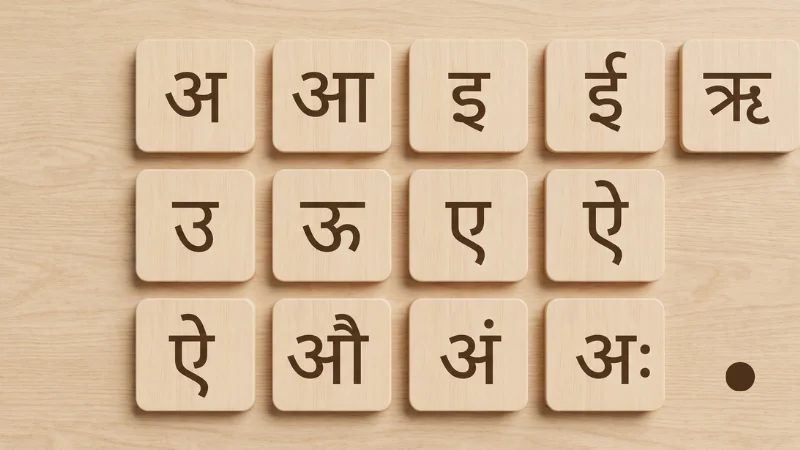
Hindi has 13 vowels called Swar (स्वर). Each is a sound produced without any obstruction of airflow. They appear both as standalone letters and as Matra signs attached to consonants.
Answers “how many?” Used for counting: ek, do, teen (one, two, three). This is what the full Hindi Numbers 1–100 guide covers in depth.
Answers “which position?” Used for rank or order: pehla, dusra, teesra (first, second, third). This is what this page covers in depth.
Informal alternative
In casual, especially urban spoken Hindi, English loanwords are also very common: फर्स्ट, सेकंड, थर्ड (first, second, third). Both are correct in everyday conversation — but formal writing, school exams, and grammar tests expect the proper Hindi ordinal forms covered below.
पूरी सूची
Ordinal Numbers 1st to 20th
— पहला से बीसवाँ तक
5 Letters
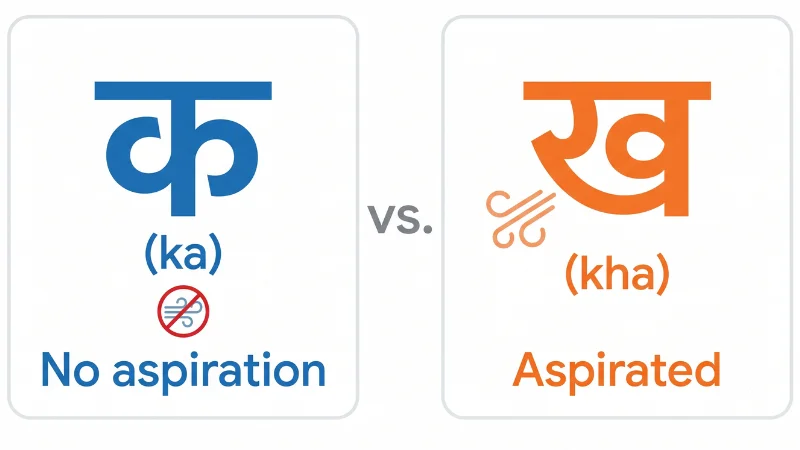
क वर्ग — Ka Varga
Velar / Kanthya (कण्ठ्य) — sounds formed in the throat/back of mouth
Pehla Se Dasvaan – The Irregular + Early Pattern Group
1st–10thGyarahvaan Se Beesvaan – The Fully Regular Group
11th–20th⚠️
Watch the two irregular spots
4th (चौथा) doesn’t follow the -वाँ pattern at all, and 6th (छठा) is a shortened irregular form rather than the expected “छहवाँ.” These two trip up most learners — everything from 5th onward except 6th follows the regular rule below.
नियम
The Pattern From 21st to 100th
— उच्चारण
Once you’re past 20, you don’t need to memorize anything new — a single rule covers every remaining ordinal number.
| Cardinal | Ordinal (Masculine) | Ordinal (Feminine) | Meaning |
|---|---|---|---|
| इक्कीस (ikkees, 21) | इक्कीसवाँ | इक्कीसवीं | 21st |
| पच्चीस (pachees, 25) | पच्चीसवाँ | पच्चीसवीं | 25th |
| तीस (tees, 30) | तीसवाँ | तीसवीं | 30th |
| चालीस (chalees, 40) | चालीसवाँ | चालीसवीं | 40th |
| पचास (pachas, 50) | पचासवाँ | पचासवीं | 50th |
| सत्तर (sattar, 70) | सत्तरवाँ | सत्तरवीं | 70th |
| सौ (sau, 100) | सौवाँ | सौवीं | 100th |
Need a cardinal number to build from?
Every ordinal above starts from its matching cardinal. See the complete list of Hindi cardinal numbers 1 to 100 to build any ordinal you need using this same rule.
व्याकरण
Gender Agreement, Explained
This is the single most important grammar rule on this page — and the part most guides skip.

The rule: match the noun, not the number
Hindi ordinals aren’t fixed words — they change to agree with the gender of the noun they describe, not with any property of the number itself. The number “one” doesn’t have a gender; the noun it’s attached to does.
| English | Hindi (Masculine noun) | Hindi (Feminine noun) |
|---|---|---|
| first boy / first girl | पहला लड़का | पहली लड़की |
| second floor | दूसरी मंज़िल (मंज़िल = floor, feminine noun) | |
| third class / grade | तीसरी कक्षा (कक्षा = class, feminine noun) | |
| fourth chapter | चौथा अध्याय (अध्याय = chapter, masculine noun) |
Quick trick
If you already know the noun’s gender (which you’d need for adjectives anyway), applying it to the ordinal is automatic: masculine noun → -आ ending ordinal, feminine noun → -ई ending ordinal. There’s no separate rule to learn — it’s the same gender-agreement pattern Hindi adjectives already follow.
प्रयोग
Ordinals in Real Sentences
Where you’ll actually encounter these — dates, buildings, rankings, and school life.
मेरा घर तीसरी मंजिल पर है।
My house is on the third floor.
वह पाँचवीं कक्षा में पढ़ता है।
He studies in the fifth grade.
वह दौड़ में पहला आया।
He came first in the race.
आज महीने की पहली तारीख है।
Today is the first date of the month.
यह मेरा दूसरा प्रयास है।
This is my second attempt.
वह अपने परिवार में सबसे बड़ी, यानी पहली संतान है।
She is the eldest — the first child — in her family.
Vowel Signs — मात्राएं (Matras)
Matras are vowel signs attached to consonants. Read the consonant sound first, then the vowel. Each matra below uses क(ka) as the base consonant to show placement.
Apply Your Matra Knowledge!
Now that you have mastered vowel signs, see how these exact matras form the names of traditional calendar months like Chaitra (चैत्र) and Vaishakha (वैशाख) in our comprehensive guide to Hindi Month Names.
प्रश्नोत्तर
Frequently Asked Questions
Direct answers to the most common questions about Hindi ordinal numbers.