
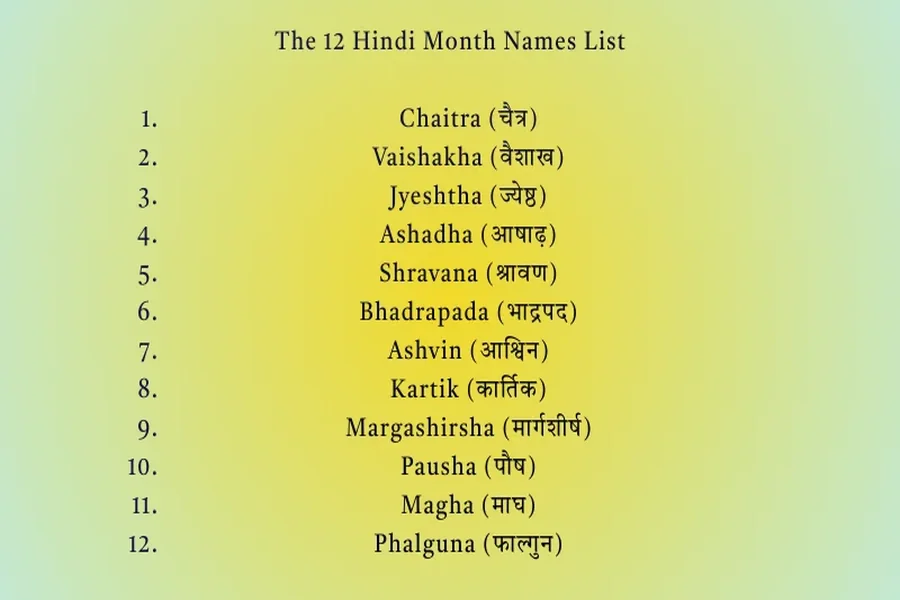
The hindi months name in sequence are an important part of the traditional Hindu calendar. Even though the Gregorian calendar is widely used for schools businesses and daily activities millions of people across India still follow the Hindu calendar for festivals religious ceremonies weddings and other cultural events. Every month has its own meaning seasonal importance and special celebrations.
Learning the Hindi months in the correct order helps students understand Indian traditions and makes it easier to remember when important festivals are celebrated. It also helps people understand why Hindu festivals fall on different English dates every year. Since the Hindu calendar is mainly based on the lunar cycle the starting and ending dates of the months change slightly every year.
The Hindu calendar has been followed for thousands of years. It reflects the close relationship between nature farming seasons and spiritual life. Every month introduces new weather conditions agricultural activities and cultural celebrations.
This guide explains the hindi months name in sequence along with their meanings seasons major festivals and practical importance in modern life.
Complete hindi months name in sequence
The Hindu calendar contains twelve months. They always appear in the same order even though their exact dates change each year.
| Sequence | Hindi Month | Hindi Script | Approximate English Months |
|---|---|---|---|
| 1 | Chaitra | चैत्र | March to April |
| 2 | Vaishakha | वैशाख | April to May |
| 3 | Jyeshtha | ज्येष्ठ | May to June |
| 4 | Ashadha | आषाढ़ | June to July |
| 5 | Shravana | श्रावण | July to August |
| 6 | Bhadrapada | भाद्रपद | August to September |
| 7 | Ashwin | आश्विन | September to October |
| 8 | Kartika | कार्तिक | October to November |
| 9 | Margashirsha | मार्गशीर्ष | November to December |
| 10 | Pausha | पौष | December to January |
| 11 | Magha | माघ | January to February |
| 12 | Phalguna | फाल्गुन | February to March |
Remembering this sequence makes it easier to understand the order of festivals and seasonal changes throughout the Hindu year.
Understanding Every Month in the Correct Sequence
Chaitra
Chaitra is the first month of the Hindu calendar. It marks the arrival of spring and the beginning of the Hindu New Year in many parts of India. Chaitra Navratri Ram Navami Gudi Padwa and Ugadi are celebrated during this month.
Vaishakha
Vaishakha follows Chaitra and is considered one of the most sacred months. People perform charity religious worship and community service. Akshaya Tritiya and Buddha Purnima are celebrated during this period.
Jyeshtha
Jyeshtha is usually the hottest month of the year in many regions. Families focus on staying hydrated and protecting themselves from the summer heat. Vat Savitri Vrat and Ganga Dussehra are important observances.
Ashadha
Ashadha marks the beginning of the rainy season in many areas. Farmers prepare their fields for cultivation. Jagannath Rath Yatra and Guru Purnima are among the major celebrations.
Shravana
Shravana is widely regarded as one of the holiest months for Lord Shiva. Devotees observe Monday fasts visit temples and perform special prayers. Raksha Bandhan and Nag Panchami also fall during this month.
Bhadrapada
Bhadrapada is known for joyful festivals. Janmashtami celebrates the birth of Lord Krishna while Ganesh Chaturthi honors Lord Ganesha with colorful celebrations across India.
Ashwin
Ashwin follows the rainy season and brings clear skies with pleasant weather. Navratri Durga Puja Dussehra and Sharad Purnima make this one of the busiest festival months.
Kartika
Kartika is one of the most auspicious months of the Hindu calendar. Diwali Govardhan Puja Bhai Dooj and Kartik Purnima are celebrated with great devotion.
Margashirsha
Margashirsha marks the beginning of cooler weather. Many people increase religious activities and study sacred texts. Gita Jayanti is observed during this month.
Pausha
Pausha is associated with winter traditions family gatherings and seasonal foods. Religious observances continue while people prepare for the coming harvest season.
Magha
Magha is famous for spiritual activities holy river bathing and charity. Makar Sankranti Vasant Panchami and Magh Mela attract millions of devotees.
Phalguna
Phalguna is the final month of the Hindu calendar. Holika Dahan Holi and Maha Shivaratri bring colorful celebrations before the new year begins again with Chaitra.
Hindi Months and Traditional Indian Seasons
The Hindu calendar divides the year into six seasons. Every season includes two consecutive months.
Vasant Ritu
Chaitra and Vaishakha represent spring with blooming flowers fresh greenery and comfortable temperatures.
Grishma Ritu
Jyeshtha and Ashadha represent summer with high temperatures and the arrival of early monsoon showers.
Varsha Ritu
Shravana and Bhadrapada bring the rainy season that supports farming and replenishes rivers.
Sharad Ritu
Ashwin and Kartika offer pleasant weather and clear skies making them ideal for major festivals.
Hemant Ritu
Margashirsha and Pausha bring cool mornings and mild winter conditions.
Shishir Ritu
Magha and Phalguna complete the winter season before spring returns once again.
These seasonal divisions show how closely the Hindu calendar is connected with nature and agriculture.
Why Learning the Sequence Is Important
Knowing the months in order provides many practical benefits.
Students understand history culture and religious traditions more easily.
Families can follow festival dates without confusion.
Travelers can plan visits during famous celebrations.
Teachers use the sequence to explain Indian calendars in classrooms.
People preparing for competitive examinations often study traditional calendars as part of general knowledge.
Understanding the sequence also makes it easier to remember seasonal changes and farming activities associated with each month.
Easy Ways to Remember hindi months name in sequence
Many learners struggle to remember all twelve months. These simple methods make memorization easier.
Read the sequence aloud every morning.
Write the names in order several times each week.
Associate every month with one major festival.
Use flashcards with the Hindi month on one side and the English equivalent on the other.
Display a Hindu calendar at home for daily reference.
Practice the sequence with family members or classmates.
Review the names every weekend until they become familiar.
Consistent practice is the easiest way to remember the complete sequence.
Difference Between Hindi Months and English Months
The English calendar follows the movement of the Sun and uses fixed dates every year.
The Hindu calendar mainly follows the lunar cycle which causes the starting dates of the months to change annually.
English months are primarily used for education business government work and international communication.
Hindi months are mainly used for festivals weddings religious ceremonies fasting days and cultural traditions.
Both calendars are valuable and many people use them together throughout the year.
Final Thought
The hindi months name in sequence represent much more than a simple calendar. They preserve India’s cultural identity spiritual traditions seasonal knowledge and agricultural heritage. Every month introduces unique festivals weather patterns and customs that have been passed from one generation to the next.
Learning the months in the correct order helps students understand Indian history and festivals while also making it easier to follow the Hindu calendar. Whether you are studying for school preparing for competitive exams or simply interested in Indian culture understanding the sequence of Hindi months is valuable knowledge that remains relevant today.
FAQs
How many months are there in the Hindu calendar?
There are twelve months in the traditional Hindu calendar.
What is the correct sequence of Hindi months?
The sequence is Chaitra Vaishakha Jyeshtha Ashadha Shravana Bhadrapada Ashwin Kartika Margashirsha Pausha Magha and Phalguna.
Which is the first Hindi month?
Chaitra is the first month of the Hindu calendar.
Which is the last Hindi month?
Phalguna is the final month before the new year begins again with Chaitra.
Why do Hindi months change every year?
The Hindu calendar mainly follows the lunar cycle so the starting dates change slightly every year.
Which month includes Diwali?
Diwali is celebrated during Kartika.
Which month includes Holi?
Holi is celebrated during Phalguna.
Why should students learn hindi months name in sequence?
Learning the sequence helps students understand Indian culture religious festivals seasonal changes traditional calendars and general knowledge more effectively.